
CQC factual accuracy check: challenging a draft report
Got a draft CQC report? You have 10 working days to fix the facts
CQC has sent your draft report. Once it's published, a factual error is no longer grounds for a CQC review. You have 10 working days from the date of CQC's email to correct the facts. CQC extends only in exceptional cases. It isn't enforcement, but it matters. Call now, while there's time to find the evidence.
We know how this feels
Reading a draft report about your own service is horrible. Sometimes it describes a place you barely recognise: a comment taken out of context, a record nobody asked to see, a finding built on one bad morning.
The urge is to write back angrily, today. Please don't. CQC works from evidence. In our experience, an angry reply with nothing behind it changes nothing.
Keep it in proportion, too. A draft report isn't enforcement, and nobody is taking your registration today. But this is the last point where you can correct the record before it goes public. If the draft says Inadequate or Requires Improvement, that matters for a long time, and the draft may not be the only thing that needs your attention.
What is a CQC factual accuracy check?
The factual accuracy check is your chance to correct a draft CQC report before CQC publishes it. You have 10 working days from the date of CQC's email to submit comments. It covers facts and evidence from the time of the assessment. It won't reopen a rating just because you disagree with it.
CQC sends the draft to each registered person, for example the nominated individual and the registered manager. For most assessments the email links to an online portal where you enter comments against each section and upload evidence. For assessments that need both location and service type ratings, such as NHS acute trusts, independent health hospitals and independent single-speciality services, the draft comes by email with a Microsoft Word form.
This page is general information, not legal advice.
Why does the factual accuracy check matter so much?
Because facts can still move the result. CQC says it may change draft ratings or judgements if the evidence behind them is inaccurate or incomplete. After publication, that door closes. The only CQC route left is a rating process review, and a factual error is not a ground for one.
What you send also travels further than the report. CQC says it considers information shared at the factual accuracy check when deciding whether to take enforcement action. If the draft rates you Inadequate overall, CQC's 2015 special measures guidance (now under review) says the draft will also propose placing the service in special measures.
Bring evidence for every point. If CQC has evidence for a point in the draft, it's entitled to rely on it. If you dispute a point and send nothing to back it up, CQC may ask you for it, and that eats into ten days you don't have.
If CQC has also served a Notice of Proposal, the factual accuracy check does not answer it. Representations on a notice are a separate process with their own deadline, so put anything relevant in the representations as well.
Why is it so hard to get right in time?
Ten working days is two weeks on paper. In practice it's a handful of evenings, because the service still has to run. In that time you need to read every line, sort what CQC can consider from what it can't, and find dated records from weeks ago.
It's also hard to read criticism of your own work and stay factual. In our experience, the strongest responses come from someone who wasn't in the room for the assessment and can test each point coldly against the records.
And the rules are narrow. Improvements you've made since the assessment usually won't count towards the rating. Arguments about the rating itself won't count at all. In our experience, telling which is which under time pressure is where responses go wrong.
How we support your factual accuracy response
We take the process off your shoulders while keeping you in control of what's said. Our team reviews the draft report line by line, identifies the inaccuracies and omissions, and finds the dated evidence behind each one.
Then we prepare evidence-backed responses that CQC can check quickly, one point at a time, and support your engagement with CQC: requests for evidence extracts, questions about the process and the tone of everything you send.
We also tell you honestly which points are worth making. Where a finding is fair, we say so, and we help you start fixing it.
How we help with a draft report
- An urgent, independent review of the draft against the regulations and CQC's framework
- Identifying every inaccuracy and omission, and sorting what CQC can and can't consider
- Finding the dated evidence behind each point
- Evidence-backed factual accuracy comments, drafted and checked by our team
- Support with requests to CQC for evidence and other engagement with CQC
- An assessment of your wider regulatory position, beyond the draft
- A prioritised improvement plan for the findings that stand, and practical help to deliver it
- Preparation for any further regulatory or enforcement action
- Our trusted legal partners on any enforcement notice that comes alongside
What you can correct
- Typographical or numerical errors, such as a wrong date, a wrong number of beds or a miscounted record.
- Information that contributed to a judgement and is factually wrong, with evidence of the position at the time of the assessment.
- Information that was left out and is relevant to the time of the assessment.
What the check is not for
CQC points each of these to a different route.
- Disagreeing with a rating or a score. After publication, the route is a rating process review, on process grounds only.
- Complaining about how CQC carried out the assessment. That goes through CQC's complaints process.
- Challenging enforcement activity. That goes through representations on the notice.
- Improvements made since the assessment. You can send them, but unless there are exceptional circumstances they will not form part of CQC's decision on final judgements or ratings.
What to do in the 10 working days
The day splits are a suggested pace, not CQC rules. The only fixed date is the deadline.
Day 1: diary the deadline
Count 10 working days from the date on CQC's email, not from when someone opened it. Put the date in every diary that matters. If you can't meet it, tell CQC why in writing straight away. CQC only extends the deadline in exceptional circumstances.
Day 1: agree who owns the response
Each registered person gets the email. Agree one owner and one response, so the nominated individual and the registered manager don't send different versions. If you want help, call us today, while all ten days are still left.
Days 1 to 2: read the whole draft and mark every point
Read it once for sense, then again line by line. Highlight every statement you think is wrong, incomplete or missing context. Do not draft anything yet.
Days 2 to 4: sort each point
Put each point into one of CQC's three categories: a typographical or numerical error, wrong information that fed a judgement, or missing information from the time of the assessment. Move disagreements with the rating and recent improvements onto a separate list.
Days 2 to 6: pull the evidence
For each point, find the record that shows the position at the time of the assessment. Dated records carry weight. A policy written last week does not.
Days 6 to 8: write each comment
One comment per point, using the structure below. Keep each one short, factual and tied to a named piece of evidence.
Days 8 to 9: senior review
Someone who didn't draft it checks every claim against its evidence, cuts anything outside the three categories and takes the heat out of the tone.
Before the deadline: submit and keep a copy
Submit through the portal or the Word form, as CQC's email directs. Keep a copy of exactly what you sent and when, with every attachment.
How to structure each challenge
Build a table in a spreadsheet first, one row per point, then enter each row against the matching section in CQC's portal or form. These are the columns.
Reference
The section of the draft report and the paragraph or quality statement the point sits under, so CQC can find it in seconds.
What the draft says
Quote the exact words. Do not paraphrase.
Type of issue
Typographical or numerical error, factually wrong information that contributed to a judgement, or omitted information relevant to the time of the assessment.
What is correct
One or two plain sentences stating the accurate position. No adjectives and no argument.
Evidence
The document name, its date and the page or entry that proves the point. It must show the position at the time of the assessment.
Finding it affects
Where the error fed a finding, name the finding. Point to the error and let CQC weigh it. Do not ask for a different rating.
Can you ask CQC for its evidence?
Partly. CQC won't release the inspector's full notes. It will consider a request for extracts about a specific issue, where you need them to understand the basis for a statement you believe is wrong.
Keep the request short and specific, and say why you need it to raise a point of factual accuracy. Send it to your assessor, or to enquiries@cqc.org.uk quoting your assessment reference, which starts with AP. Ask on day one. CQC's guidance doesn't say the deadline stops while you wait.
CQC also won't identify anyone who shared concerns with it, so don't spend your ten days trying to find out who said what.
What happens after you submit?
CQC considers your points and decides whether to amend the draft. Another member of CQC's staff, independent of the original assessment, reviews every factual accuracy response. If changes affect a judgement or rating, the assessor explains them in CQC's response. CQC then sends you that response and publishes the final report.
If there are no errors, you can confirm you've reviewed the draft, and CQC can publish the final version.
Evidence that supports a point
- Care plans, risk assessments, medicines records and daily notes dated within the assessment period.
- Training matrices and supervision records showing the position on the assessment dates.
- Rotas and dependency records for any point about staffing.
- Audit results, action logs and meeting minutes, with dates.
- Incident, safeguarding and complaints logs, with outcomes.
- A policy only where the report says one did not exist. A policy alone does not show what happened in practice.
- Redact personal details CQC does not need to see the point.
After publication: the rating process review
If the report is published and you believe CQC did not follow its process for making rating decisions, you can ask for a rating process review. You have 15 working days from publication. The registered manager or nominated individual submits it on CQC's online form, within a 500-word limit, and you get one request per assessment.
CQC aims to finish a review within 50 working days. The rating stays published while it runs, with a message displayed. Scores and ratings can go down as well as up as a result of a review. CQC describes it as the final CQC process for challenging a rating. Older CQC pages call this a request for review, so check the name on CQC's current form.
Common mistakes
- Spending the first few days angry. The clock is already running.
- Counting the 10 working days from when someone opened the email.
- Arguing with the rating or a score. CQC will not treat that as a factual accuracy comment.
- Listing improvements made since the assessment as if they were corrections.
- Comments with no evidence, or with evidence dated after the assessment.
- Mixing typo fixes and substantive points in one long block, so the points that matter get lost.
- An angry or defensive tone. Facts land better without it.
- Treating the check as your answer to a Notice of Proposal.
- Waiting until the report is published, when only process grounds remain.
When the draft is part of a bigger problem
If an inspection has gone badly, the factual accuracy check is often just one part of a much bigger regulatory concern. It's natural to focus on challenging the errors in the draft. Meanwhile there may be more significant compliance issues needing immediate attention, and potentially further regulatory or enforcement action to prepare for.
Our involvement doesn't have to stop at the factual accuracy response. We support the immediate response to CQC while we assess your wider regulatory position, address the underlying concerns and put improvements in place.
That means acknowledging the findings that are fair, fixing them, evidencing the change and embedding it, so you're ready for whatever CQC does next. CQC considers what you send at the factual accuracy check when it decides on enforcement, so correcting the record and improving the service need to tell one story.
Why providers call HLTH
We deal with CQC inspections, reports and enforcement day in, day out, with decades of collective experience. Adam Duncan, our Managing Director, has served as a Specialist Advisor with CQC. Helen Stevenson, on our team, is a former CQC inspector. They know how CQC weighs evidence in a draft because they've seen it from CQC's side. Kath Cox, a former Registered Manager, knows what the records look like on the floor.
If a Warning Notice or a Notice of Proposal sits behind the draft, we prepare the compliance response to it while we work on the factual accuracy comments. Where legal representation is needed, we work with our trusted legal partners.
Who you'll work with
The people behind our factual accuracy and post-inspection work.

Helen Stevenson
CQC Registration Associate
A qualified dentist and former CQC inspector. Understands compliance and governance from both the provider's and the regulator's side.

Adam Duncan
Managing Director
Over two decades of senior clinical and operational leadership. Former CQC Specialist Advisor and Director of Quality and Governance.
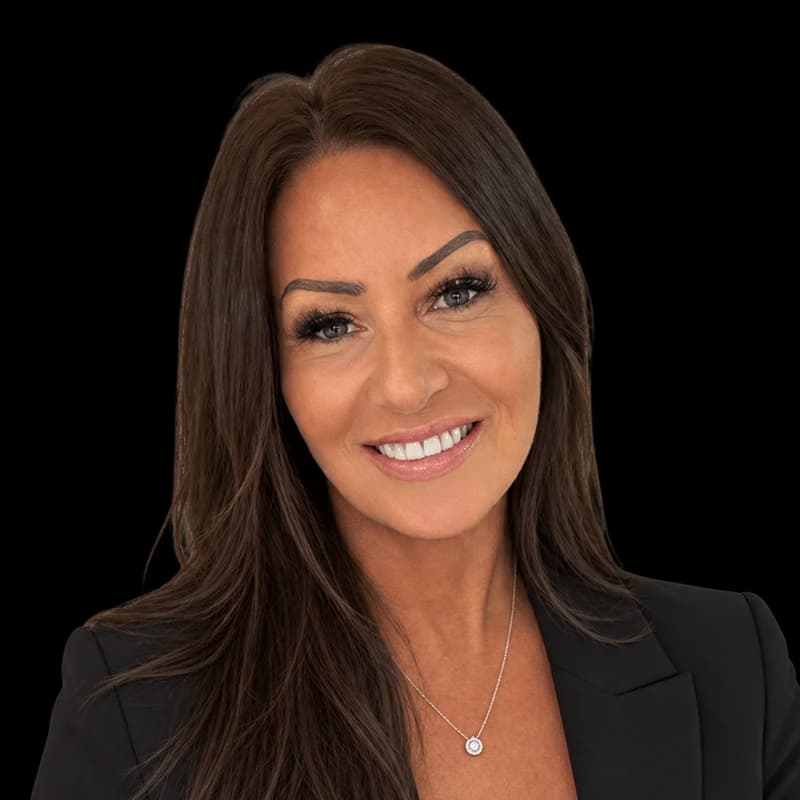
Kath Cox
Head of Adult Social Care (Service Transformation)
Former Registered Manager and Operations Manager. Leads our adult social care interim and crisis support, stabilising services and putting sound governance in place.

Dr Atif Ghaffar
Medical Director
A long-serving GP Principal and his practice's CQC lead, with experience across primary and acute care. Former Medical Director at CQC Compliance Limited.
Before your first call, have these to hand
Don't delay the call to find them.
- CQC's email with the draft report, and its date. This date starts the 10 working days.
- Your list of points you think are wrong or missing, even if rough.
- Any separate notice from CQC, such as a Warning Notice or a Notice of Proposal.
- Access to your records from the assessment period.
Who we do this for
Factual accuracy check: common questions
What is a CQC factual accuracy check?
How long do I have to respond to a draft CQC report?
Can I challenge my rating through the factual accuracy check?
Can I send evidence of improvements made since the assessment?
What can I do after the report is published?
Does the factual accuracy check cover a Notice of Proposal?
Can you help beyond the factual accuracy response?
The HLTH Compliance team provided outstanding post-inspection support, offering calm, effective guidance during a challenging time. Their approach was not only professional but also sympathetic to our unique situation, creating a constructive environment for collaboration with our staff.
Stephen Gilmour, Hevercourt LimitedPOST-INSPECTION SUPPORT
Served a notice? Call now.
020 8090 5346Speak to one of our experts
Clinicians, a former CQC inspector and a former Registered Manager.
What happens on the call
- Pick a time that suits you. The call is free and takes 15 minutes.
- You speak to one of our experts about your situation.
- You leave with a clear next step, before any big commitment.
A clear next step, before a big commitment
Got a draft CQC report? Call us today.
The ten days started when CQC sent the email. Call us the day it arrives. We'll help you sort the points, find the evidence and get it in on time, and look at the bigger picture with you.
Speak to one of our experts
Clinicians, a former CQC inspector and a former Registered Manager.
A 15-minute introductory call to explain your situation, explore the right support and discuss the next step.