
CQC Notice of Proposal: urgent representations support
A Notice of Proposal is your chance to show CQC what has changed before it decides
CQC plans to impose conditions, suspend you or cancel your registration. You have 28 days from service to respond in writing, with all your evidence. After that, CQC can decide without hearing from you. It's serious, but you have options. Call now. A strong, evidence-led response takes time to build.
We know how this feels
A Notice of Proposal uses words you never expected to see written about your service: cancel, suspend, conditions. If you're reading this with the letter open, you're probably scared and angry at the same time. Both are normal.
It can feel wildly out of proportion. Your staff get hundreds of things right every day, and the notice is about the few things that went wrong. Owners have described what follows as life-changing, and it can drag on for a long time.
So we'll be straight with you. This is serious. CQC has set out what it wants to do, and the 28 days after service are your window to show it what has changed before it decides. It isn't hopeless. In our experience, providers who acknowledge the problem and bring in experienced help straight away give themselves the best chance.
What is a CQC Notice of Proposal?
A CQC Notice of Proposal is formal written notice, under section 26 of the Health and Social Care Act 2008, that CQC proposes to take action on your registration. Depending on the notice and the statutory power used, that action may include imposing or varying conditions, suspending or cancelling registration, or refusing an application. The notice itself states the proposed action and the reasons for it.
A Notice of Proposal is not a final decision. You can make written representations against it, and CQC has to consider them before it decides.
This page is general information, not legal advice.
Is your Notice of Proposal about a registration application?
Some Notices of Proposal relate to a registration application, not enforcement against an existing service. They are serious for the applicant, but they are generally about a proposed refusal of registration, without the potentially existential implications of cancellation for an operating provider.
If you have received a Notice of Proposal in relation to a refused registration, please read more about our registration support below, or call us to speak to our Registrations team.
Why is a Notice of Proposal so serious?
Because it puts your registration itself on the table. CQC's enforcement decision tree recommends cancellation, suspension or more significant conditions when it rates a breach as high seriousness. That's one step below the extreme cases that get urgent action. A medium seriousness breach can also lead to conditions.
It's also the last point where you're dealing with CQC itself. If CQC adopts the proposal, it serves a Notice of Decision, and the only challenge left is an appeal to the First-tier Tribunal. That's a legal case in front of a judge, with its own 28-day deadline. A credible, compliance-led response now gives you the best chance of resolving things at this stage.
And CQC doesn't need you to reply. Its guidance says you don't have to challenge a Notice of Proposal, and if you don't, it will issue a Notice of Decision.
Why do the 28 days matter so much?
Because they're the only time CQC looks at your side before it decides, and it decides on paper. Section 27 of the Act gives you 28 days from service of the notice to make written representations. CQC counts them as calendar days, and it won't accept verbal representations.
Everything has to go in at once. CQC's guidance says you must submit your full representations and all the supporting evidence you want considered within the 28 days. You can't send a holding letter and follow up with the real thing later.
Your representations go to CQC's National Representations team, which makes a recommendation. A decision-maker with delegated authority then decides whether to adopt the proposal. Both are independent of the inspection team that served the notice. They decide on the notice, your representations and your evidence, and they may also look at public material such as CQC's published inspection reports.
So the file you send is what they have to go on. The people deciding weren't part of the inspection. If an improvement isn't in your evidence, they have nothing to weigh.
Why has CQC come down this hard?
CQC sees everything through risk. Its decision tree asks two questions about a breach: how much harm would follow if it happened again, and how likely is a repeat? A major potential impact with a possible repeat rates as high. So does a moderate impact with a probable repeat.
Then CQC looks for a pattern. Repeated breaches, your track record, any failure to act on known risks and the quality of your leadership can all move the action up a level, or down.
In our experience, CQC will usually read a single incident as proof that a process wasn't followed. If it happened once with dozens of people who use your service, what's to stop it happening tomorrow? What else is being missed? That's how one bad incident becomes a proposal to cancel.
There's a lever in that test, though. CQC rates the chance of a repeat as remote when control measures are in place, even if they're new and not yet embedded. Strong representations are built around evidence that the risk is now controlled.
Why is this so hard to do on your own?
Good representations work through every point in the notice, one by one, with documents behind each answer. They acknowledge what CQC has got right, correct anything that's inaccurate and show what you've changed since. Then they prove the change is working. All of it has to land inside the window.
Owners are usually too close to it. A first draft tends to be angry, or it apologises for everything. Neither helps. The decision-maker wants evidence that people are safe now and will stay safe.
And you're doing it while running a service under pressure, sometimes without a registered manager. There is a great deal to do, and it's hard to know what to tackle first. That's where we come in.
How we approach a Notice of Proposal
Our approach is collaborative and compliance-led. We acknowledge the concerns CQC has raised, address the shortfalls behind them, evidence the improvements and show CQC that they are embedded in day-to-day practice. Our priority is the best regulatory outcome, achieved through practical improvement and credible evidence.
That doesn't mean accepting everything. Where a finding is inaccurate or unsupported, we challenge it, with the evidence to back it up. There is little benefit in an adversarial position unless there is a strong, evidence-backed basis for it. In our experience, a service that has clearly understood the concerns and put them right makes a far stronger case.
At this stage our focus is a compliance-led response, ideally one that avoids the need for legal intervention altogether. Where legal input is needed, we work with our trusted legal partners.
What to do in the first 48 hours, and before day 28
The 28 days run from service of the notice, which may not be the date on the letter. General information, not legal advice.
Hour 1: work out the service date
CQC treats an emailed notice as served on the next working day after it was sent, where you have agreed to receive notices by email, and a notice sent by registered post or recorded delivery as served on the third day after posting. Count 28 calendar days from there. If you're unsure, work to the earlier date.
Hour 1: get experienced help
Call us today. Every day spent working out what the notice means is a day taken from fixing and evidencing.
Day 1: don't tell CQC you won't respond
If you tell CQC in writing that you don't intend to make representations, it can decide straight away. Send nothing like that until you've taken advice.
Day 1: make people safe, then start fixing
Deal with any current risk today. Then fix what you can and date every change. CQC's test looks at the controls you have in place now.
Days 2 to 5: work through the notice point by point
For each point, note what CQC found, the regulation it cites and whether you accept it, accept part of it or dispute it. Start pulling the records from the time of the incident and from today.
By day 21: finish the draft
Have the provider, the nominated individual and the registered manager read it and sign it off. Leave time to close any gaps.
Before day 28: send everything
Email your full representations and evidence to HSCA_NoP_Representations@cqc.org.uk, or send them by post or in person. CQC encourages you to use its form. Keep the acknowledgement email CQC sends back.
After you send: answer fast
CQC may ask you for more information, and it usually allows 7 days for you to supply it. If you don't reply, it carries on and decides.
Who you'll work with
We deal with CQC enforcement and regulatory challenges day in, day out, with decades of collective experience across different types of enforcement action. These are some of the people behind the support we deliver.
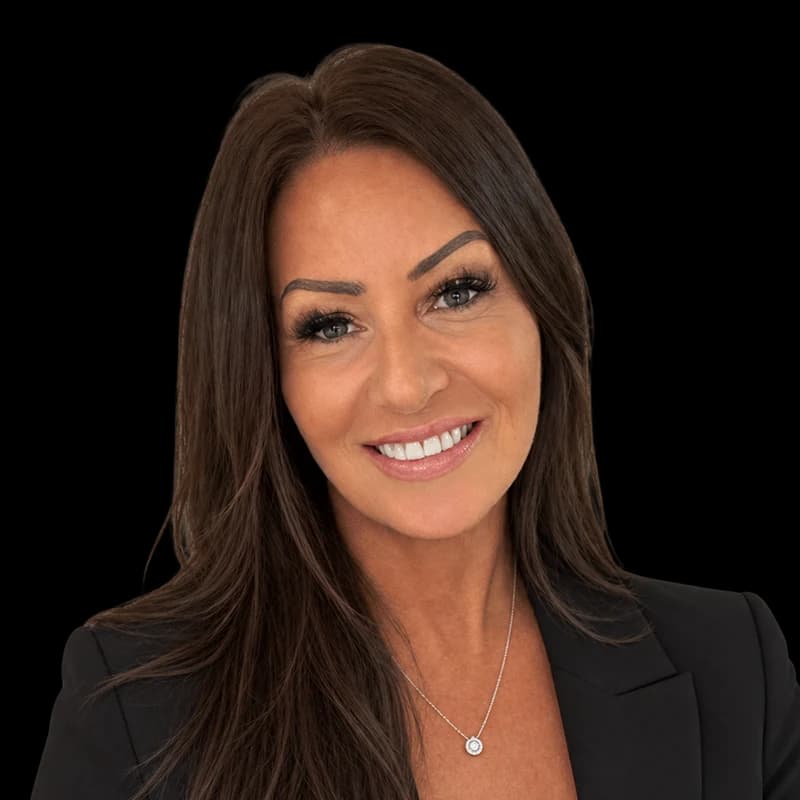
Kath Cox
Head of Adult Social Care (Service Transformation)
Former Registered Manager and Operations Manager. Leads our adult social care interim and crisis support, stabilising services and putting sound governance in place.

Adam Duncan
Managing Director
More than two decades of senior clinical and operational leadership. Former CQC Specialist Advisor and Director of Quality and Governance.

Helen Stevenson
CQC Registration Associate
A qualified dentist and former CQC inspector. Understands registration, compliance and governance from both the provider's and the regulator's side.

Dr Atif Ghaffar
Medical Director
Experienced GP Principal and his practice's CQC lead. Former Medical Director at CQC Compliance Limited.
What we do on a Notice of Proposal
- Urgent review of the notice, CQC's evidence and your deadline
- A clear assessment of CQC's findings, the regulations cited and what needs to happen first
- A point-by-point response plan
- Root-cause review and corrective action you can evidence
- Governance and compliance restructuring where oversight or internal assurance has fallen short
- An improvement plan with clear responsibilities, timescales and measurable outcomes
- Policies, procedures, care records and audit tools brought up to date
- Written representations and an evidence bundle that show what has changed and why it is working
- Interim Registered Manager cover when a manager leaves or a service needs leadership
- Professional support with CQC, commissioners, staff and families while CQC decides
- Ongoing support so the improvements stay embedded in day-to-day practice
- If CQC adopts the proposal, our legal partners can handle the appeal
A case study
An established adult social care provider with a long record of Good ratings was rated Requires Improvement, then served a Notice of Proposal to cancel its registration. Its Registered Manager then left without notice.
It called us on a Friday morning. By the following Monday we had an experienced interim manager in the service. Our senior leadership was overseeing the regulatory response, and our governance team was building the formal reply to the notice.
The work has since grown into an ongoing programme of operational and compliance improvement.
Your representations: an outline
Use this to organise your response with us.
1. Cover details
Provider and location, registered manager, nominated individual, the notice reference, the date you treat as the service date and a named contact.
2. Your position on each point
One short paragraph per point in the notice. Say whether you accept it, accept part of it or dispute it. Where CQC is right, say so.
3. Factual corrections
Quote the line, say what's wrong and point to the document that shows it. CQC says the factual accuracy check is a separate process, so repeat anything relevant here.
4. What you've changed
For each point: the change, who owns it, the date it was made and how you check it's still working.
5. Why the risk is now controlled
Speak to CQC's own test: how much harm a repeat would cause, and why your controls now make a repeat unlikely.
6. Evidence index
A numbered list of every attachment, cross-referenced to the paragraph it supports.
7. The outcome you're asking for
Ask CQC not to adopt the proposal. If you accept some action is needed, explain why a lesser step would be proportionate.
What happens after you make representations?
There's no legal deadline for CQC to decide. Its guidance says it aims to respond within 40 working days, counted from the working day after it receives your representations.
If the delegated authority decides not to adopt the proposal, CQC withdraws the notice and doesn't take the action. That isn't always the end. CQC can still serve a new Notice of Proposal where it thinks that's justified, and the representations process starts again.
If it adopts the proposal, CQC sends you a Notice of Decision. The letter tells you when the decision takes effect and how to appeal to the First-tier Tribunal. You'll have 28 days from service of that notice to appeal.
Keep the improvement work going while you wait. If CQC has reasonable cause to believe people may be exposed to a risk of harm, it can still use its urgent powers under section 31, which take effect immediately.
What happens if you do nothing?
CQC issues a Notice of Decision. Once the 28 days have passed, the law lets CQC decide whether or not you've said anything.
From there, the only way to stop the decision is a tribunal appeal. If a cancellation takes effect, carrying on the regulated activity is an offence under section 10 of the Act. Carrying on while suspended is an offence under section 34. It goes public too. Unless the Tribunal overturns it, CQC must publish a cancellation or suspension once the appeal window closes or the appeal ends.
If a company commits one of those offences with a director's consent or connivance, or through their neglect, the director is guilty as well, under section 91 of the Act. Where failings are serious, CQC can also prosecute, and it may do so at the same time as other enforcement action.
Common mistakes
- Sending a holding letter and planning to follow up. CQC wants everything inside the 28 days.
- Counting from the date printed on the letter instead of the date of service.
- Treating it as a fight. Acknowledge what's true, show what you've fixed, and challenge only what the evidence doesn't support.
- Sending new policies with no proof that practice has changed.
- Phoning CQC to argue your case. It doesn't accept verbal representations.
Before your first call, have these to hand
Don't delay the call to find them.
- The Notice of Proposal, and the email or envelope it came in. This fixes the service date.
- The inspection report or draft report, and any factual accuracy comments you've sent.
- A short chronology of what happened and what you've already put right.
Who we do this for
Notice of Proposal: common questions
What is a CQC Notice of Proposal?
How long do I have to respond to a Notice of Proposal?
Does a Notice of Proposal mean my registration will be cancelled?
What happens after I make representations?
Can I appeal a CQC Notice of Proposal?
Should we challenge CQC's findings?
Do I need a lawyer for a Notice of Proposal?
The HLTH Compliance team provided outstanding post-inspection support, offering calm, effective guidance during a challenging time. Their approach was not only professional but also sympathetic to our unique situation, creating a constructive environment for collaboration with our staff.
Stephen Gilmour, Hevercourt LimitedPOST-INSPECTION SUPPORT
Served a notice? Call now.
020 8090 5346Speak to one of our experts
Clinicians, former CQC inspectors and a former Registered Manager.
What happens on the call
- Pick a time that suits you. The call is free and takes 15 minutes.
- You speak to one of our experts about your situation.
- You leave with a clear next step, before any big commitment.
A clear next step, before a big commitment
Received a Notice of Proposal? Call us today.
CQC will only weigh what you send it, and all of it has to arrive inside the window. Call our team now.
Speak to one of our experts
Clinicians, former CQC inspectors and a former Registered Manager.
A 15-minute introductory call to explain your situation, explore the right support and discuss the next step.