
CQC Notice of Decision: urgent compliance support
A Notice of Decision means CQC has already made up its mind
CQC has decided to go ahead with conditions, suspension or cancellation. Only a tribunal appeal can stop it, and you have 28 days from service to lodge it. Miss it and the decision takes effect. It's serious, but there is still a lot that can be done. Call now. The sooner we start, the better.
We know how this feels
If you're reading this with the notice in front of you, you're probably frightened. That's normal. A Notice of Decision puts your registration and your business on the line, and it usually lands after months of pressure.
It can feel unfair, too. Your team gets hundreds of things right every day, then one incident or one missed record and CQC treats the whole service as a risk. Owners have told us it was life-changing. One didn't sleep properly for months.
So we won't pretend it's minor. It isn't hopeless, though. In our experience, providers who acknowledge the problem and get experienced help in straight away do far better than those who wait.
What is a CQC Notice of Decision?
A CQC Notice of Decision is CQC's formal confirmation that it is going ahead with the action it set out in an earlier Notice of Proposal: new or changed conditions, a suspension, or cancellation of your registration.
CQC gives the notice under section 28 of the Health and Social Care Act 2008. The notice must explain your right of appeal and state the conditions or the suspension period. If your service has a registered manager, CQC must send them a copy of the provider's notice, and the other way round.
This page is general information, not legal advice.
Why is a Notice of Decision so serious?
Because CQC has already made up its mind. The representations stage is over, and an independent tribunal now decides any challenge.
If you sent representations against the Notice of Proposal, CQC's National Representations team reviewed them. That team is independent of the inspectors who proposed the action. A CQC decision-maker with delegated authority then adopted the proposal. If you didn't challenge the proposal, CQC issues the Notice of Decision anyway.
Either way, the only route left is an appeal to the First-tier Tribunal. You have 28 days from service of the notice to bring it. That's very little time to prepare an appeal and, just as importantly, to show the service has changed.
Why has CQC come down this hard?
CQC looks at everything through risk. Its enforcement guidance tells staff to judge what would happen if the breach were repeated, and how likely a repeat is. Put together, those rate the breach as low, medium, high or extreme. A high rating points CQC towards cancellation, suspension or more significant conditions.
The guidance also tells CQC staff to look for a pattern: repeated breaches, your history, any failure to assess or act on known risks, and whether your leadership and governance are adequate.
So a missed risk assessment is rarely treated as just one bad day. In our experience, CQC reads it as proof that a process wasn't followed. If it happened once with dozens of people in your care, what stops it happening tomorrow? What else isn't being done?
That's why CQC can seem to go from nought to a hundred. It has the power to stop a service. In our experience, it will use it unless you can show, with evidence, that people are safe.
Why is this so hard to handle on your own?
Because two very different kinds of work have to happen at once. One is the appeal. The Tribunal rules say the appeal must give details of the decision, the result you want and your grounds. Your grounds have to show where CQC got the facts wrong, or why its action goes further than the risk justifies. CQC has to show its decision is justified, but you need evidence that answers its case.
The other is the service itself. CQC's concerns still need to be identified and addressed: governance strengthened, corrective action put in place, and improvements evidenced and embedded so they last. That work matters whatever the Tribunal decides.
You'll exchange bundles of evidence with CQC before the hearing. At the hearing, a judge and two specialist members of the Tribunal hear the case, and CQC is represented by its own lawyer. Each party usually pays its own costs.
Meanwhile you still have a service to run, staff to reassure and commissioners asking questions. In our experience, most providers only bring in proper help after something has gone wrong. With a Notice of Decision, it already has.
How we help at Notice of Decision stage
At this stage providers are more likely to need two distinct kinds of expertise: specialist compliance support and legal help with the appeal. We provide the compliance support. Our legal partners can handle the appeal.
Our focus is the service. We identify and address the concerns CQC has raised, strengthen governance, put corrective action in place, and evidence the improvements so they are embedded and sustainable. That gives a clear, evidenced picture of where the service is now, for CQC and for the Tribunal.
The appeal is legal work, and our legal partners can handle the appeal. We do the compliance and improvement work and the evidence of change, and we work closely with them, so the legal case and the compliance evidence tell the same story.
What to do in the first 48 hours, and before the deadline
The appeal deadline is 28 days after service of the notice. Service may not be the date printed on the letter. General information, not legal advice.
Hour 1: find the service date
An emailed notice counts as served on the next working day after sending, where you have agreed to receive notices by email. A notice sent by registered post or recorded delivery counts as served on the third day after posting. CQC counts the 28 days as calendar days. If unsure, use the earlier date.
Hour 1: get experienced help
Call us today. Every day spent reading up comes off the time to improve the service and prepare your appeal.
Day 1: write the deadline down and share it
Send it to the provider, the nominated individual and the registered manager. Set reminders at day 14 and day 21.
Day 1: do not tell CQC you will not appeal
A written statement that you will not appeal brings the decision into force when CQC receives it. Send nothing of that kind until you have taken advice.
Day 1: acknowledge the problem and start fixing it
Fix what you can and date every change. In our experience, showing you've dealt with the risk lands far better than arguing CQC got everything wrong.
By day 21: decide whether to appeal
Agree with your legal representatives whether to appeal and what to ask for. The Tribunal can confirm the decision or direct that it is not to have effect. It can also vary or remove conditions, impose its own, or change a suspension period.
Before day 28: file the appeal
Appeal in writing on the First-tier Tribunal (Care Standards) form, by email to cst@justice.gov.uk or by post, with the Notice of Decision attached. Assume the Tribunal cannot accept a late appeal. In some cases it has no power to extend the time limit.
Who you'll work with
We deal with CQC enforcement and regulatory challenges day in, day out, with decades of collective experience across different types of enforcement action. These are some of the people behind the support we deliver.
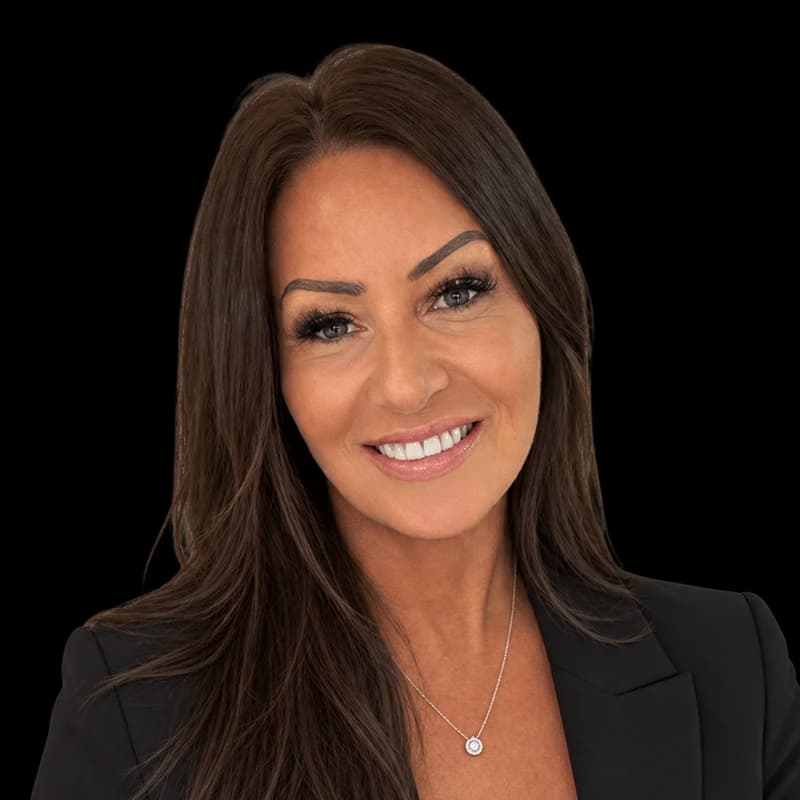
Kath Cox
Head of Adult Social Care (Service Transformation)
Former Registered Manager and Operations Manager. Leads our adult social care interim and crisis support, stabilising services and driving measurable improvement.

Adam Duncan
Managing Director
More than two decades of senior clinical and operational leadership. Former CQC Specialist Advisor and Director of Quality and Governance.

Helen Stevenson
CQC Registration Associate
A qualified dentist and former CQC inspector. Understands compliance and governance from both the provider's and the regulator's side.

Dr Atif Ghaffar
Medical Director
Experienced GP Principal and his practice's CQC lead. Former Medical Director at CQC Compliance Limited.
What we do on a Notice of Decision
- Urgent review of the Notice of Decision, the earlier proposal and CQC's evidence
- A clear assessment of CQC's concerns, which matter most and what needs to change first
- Corrective action plans with clear responsibilities, timescales and measurable outcomes
- Governance and compliance restructuring, so oversight and internal assurance stand up to scrutiny
- Clinical and operational improvement in the areas CQC identified
- Experienced people on site to put the changes in place and embed them
- Evidence of improvement, collated and presented for CQC and the Tribunal
- Chronology, evidence bundle and witness preparation
- Working alongside our trusted legal partners, who can handle the appeal
- Independent nurse expert witnesses for tribunal cases
- Interim Registered Manager cover when a manager leaves or a service needs leadership
- Support with CQC, commissioners, staff and families while the case runs
Does a Notice of Decision take effect straight away?
Not if CQC used the normal procedure. Under section 28(6) of the Act, it takes effect at the end of the 28-day appeal period. If you appeal, it takes effect only when the Tribunal decides the appeal or you abandon it. CQC's guidance says that while you appeal a non-urgent Notice of Decision, you can continue to carry on the regulated activity.
Use that time to keep improving. If CQC has reasonable cause to believe people may be exposed to a risk of harm, it can still use its urgent powers under section 31 to suspend you or impose conditions with immediate effect. Urgent action applies at once and stays in place during any appeal.
Watch for one trap. If you tell CQC in writing that you will not appeal, the decision takes effect as soon as CQC receives that letter.
What happens after you appeal?
You start the appeal with the Tribunal form. CQC, as respondent, must then reply within 20 working days of receiving your application. A telephone case management hearing follows. On that call you usually agree when to exchange documents and witness statements and put together the hearing bundle. The judge then sets a hearing date, and the details go on the Tribunal's list of hearings. Hearings take place in public unless the Tribunal directs otherwise.
If you and CQC reach agreement before the end of the hearing, you can ask the Tribunal to dispose of the appeal with a consent order. If you think the Tribunal got the law wrong, you can ask it for permission to appeal to the Upper Tribunal. Your application must reach the Tribunal within 28 days after it sends you its written reasons, and it must identify the error of law.
What happens if you do nothing?
If you do not appeal, the decision takes effect at the end of the 28 days.
If CQC cancels your registration, you are no longer registered for that activity. Carrying it on after that is an offence under section 10 of the Act. If CQC imposes conditions, breaching one without reasonable excuse is an offence under section 33. If CQC suspends your registration, carrying on the activity during the suspension is an offence under section 34.
If a company commits one of these offences with a director's or manager's consent or connivance, or through their neglect, that person is guilty of the offence too, under section 91 of the Act. Where failings are serious, CQC can also prosecute, and it may do so at the same time as other enforcement action.
Cancellations and suspensions also go on CQC's website, with the provider's name, the activity, the reason and the address.
A case study
An established adult social care provider with a long record of Good ratings was served a Notice of Proposal to cancel its registration, and its Registered Manager then left without notice. It called us on a Friday morning. By the following Monday we had an experienced interim manager in the service, and our governance team was building the formal reply.
That case was caught at the proposal stage. At Notice of Decision stage the work is the same, with less time and more at stake.
Your appeal preparation: an outline
Use this to organise the work with us and your legal representatives.
1. The decision
The Notice of Decision, the Notice of Proposal before it, the date and method of service, and your deadline.
2. Evidence of where the service is now
Audits, governance minutes, dated action plans, rotas, training records and feedback from the people you support.
3. A chronology
Dated events from the first concern to today, including every fix you made.
4. Your grounds
Where CQC's facts are wrong or out of date, and why the action goes further than the risk justifies. Your legal representatives turn these into legal grounds.
5. The result you want
Direct that the decision is not to have effect, or change the conditions or the suspension period.
6. Witnesses
The registered manager, senior staff, the nominated individual and, where needed, an independent expert witness.
7. An operations plan
How you keep the service safe and keep improving during the appeal, and your plan if the Tribunal confirms the decision.
Common mistakes
- Waiting to see what CQC does next. It has already decided.
- Counting the 28 days from the date on the letter. The clock runs from service.
- Expecting an extension. Treat 28 days as a hard limit.
- Sending the Tribunal the arguments that failed at representations, with no new evidence.
- Treating it as a purely legal problem and stopping improvement work while you wait. Evidence of where the service stands now may help your case.
- Leaving the provider or the registered manager out of the plan. CQC sends each of them a copy.
Before your first call, have these to hand
Don't delay the call to find them.
- The Notice of Decision, and how and when it reached you. This fixes the service date that starts the 28-day clock.
- The Notice of Proposal, your written representations and any reply from CQC.
- A short chronology of what happened and what you've already put right.
Who we do this for
Notice of Decision: common questions
What is a CQC Notice of Decision?
How long do I have to appeal a CQC Notice of Decision?
Does a Notice of Decision take effect straight away?
Can I get more time to appeal?
Is it worth improving the service if CQC has already decided?
Will CQC publish the decision?
Can directors be held personally responsible?
Do I need a lawyer to appeal a CQC Notice of Decision?
The HLTH Compliance team provided outstanding post-inspection support, offering calm, effective guidance during a challenging time. Their approach was not only professional but also sympathetic to our unique situation, creating a constructive environment for collaboration with our staff.
Stephen Gilmour, Hevercourt LimitedPOST-INSPECTION SUPPORT
Served a notice? Call now.
020 8090 5346Speak to one of our experts
Clinicians, a former CQC inspector and a former Registered Manager.
What happens on the call
- Pick a time that suits you. The call is free and takes 15 minutes.
- You speak to one of our experts about your situation.
- You leave with a clear next step, before any big commitment.
A clear next step, before a big commitment
Received a Notice of Decision? Call us today.
The appeal clock started when the notice was served. Talk to our team now about strengthening the service and evidencing the change. Our trusted legal partners can handle the appeal.
Speak to one of our experts
Clinicians, a former CQC inspector and a former Registered Manager.
A 15-minute introductory call to explain your situation, explore the right support and discuss the next step.